News + Thought
Building an AI software factory: how do you know when the work is finished?
During the Skywire website redesign, a page passed its broken-image check even though a product image was missing. The check had done exactly what we’d asked of it. Every image the page tried to load was there. The one we wanted had been left out altogether. That’s the question I keep coming back to when building an AI software factory: who decides whether the work is finished?
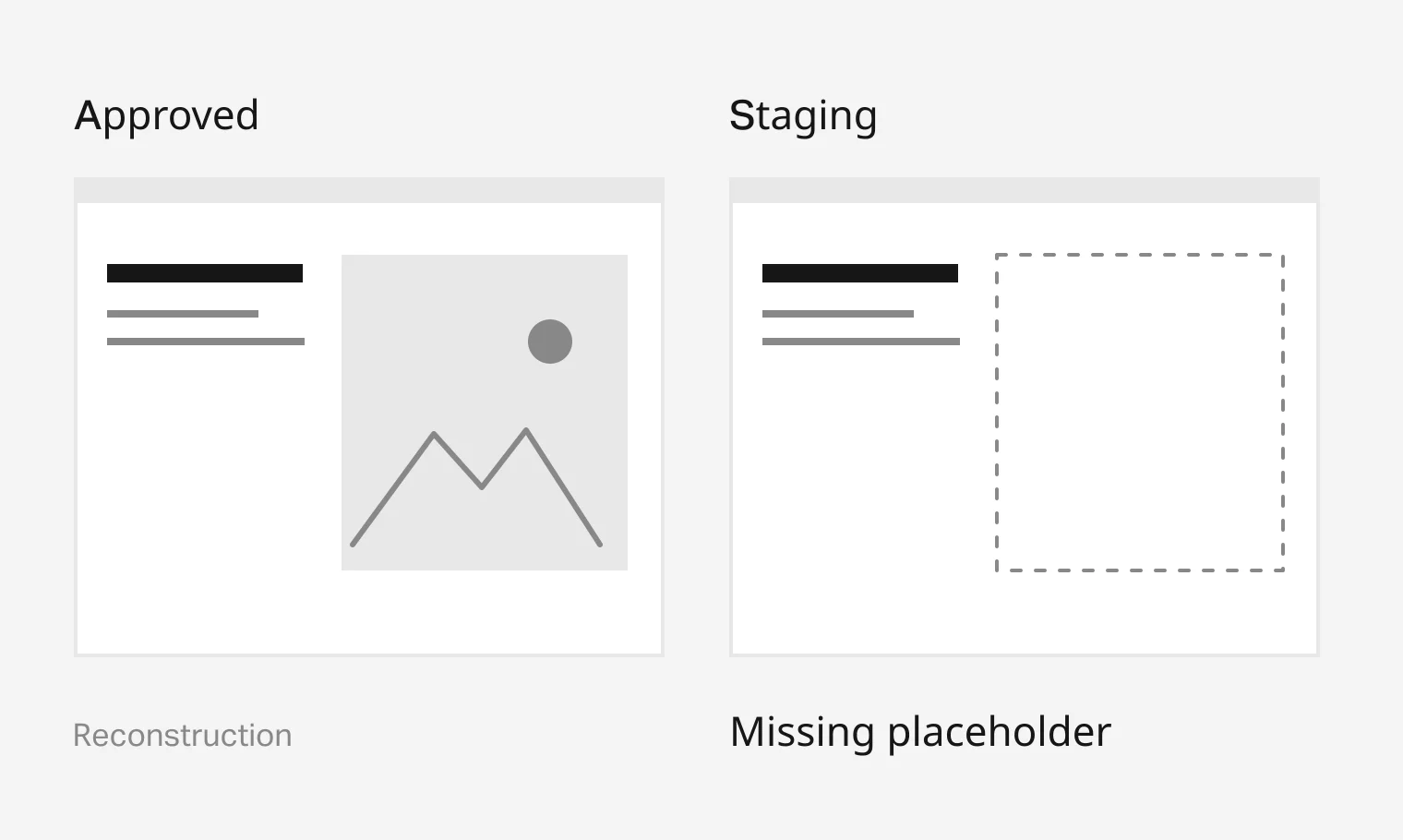
The reviewer had something the automated check didn’t: the approved design. We’d agreed to use a neutral placeholder where the screenshot would go. Put the staging page beside the design, and you could see that the space was empty. I think that small example gets to one of the more interesting questions about software factories. If you’re going to hand over more of the development process, how will the system know when it’s finished?
What I mean by a software factory
When I talk about a software factory, I mean a way of organising development so I can hand over a brief and expect the work to go through a familiar process. Agents build it, other agents review it, and straightforward fixes go back through that process. If a finding changes what we’re building, how long it will take or what it will cost, I expect to see the options. When it’s ready, I want evidence I can judge for myself.
The term has been around for years. Microsoft used it for a development environment set up to build a particular kind of application, with patterns and tools the team could reuse. Today, teams use the same term for quite different degrees of automation. StrongDM, for example, describes a system in which people define scenarios and agents both write and check the code. Where you place human review is one of the decisions you make when designing your own process.
What we handed over on the redesign
We gave the build workflow a brief, a task list and a dedicated branch. The work could move forward there while decisions were recorded for us to inspect later. Production release stayed separate. That made it practical to split the redesign into pieces small enough for one agent to build and another to check against the design.
There was a wrinkle with the missing image. The original screenshot contained client information, and the staging site was public. The decision to withhold it was sound. Restoring the original screenshot would have exposed that information. The agreed placeholder gave the reviewer a way to flag the gap and specify a safe fix.
When the work first came back for another look, there was a commit labelled as a fix. The reviewer opened it, found it contained no file changes and took fresh screenshots. The gap was still there. A follow-up task supplied the approved placeholder and wordmark, and checked the panel against the design at desktop and mobile widths. That sequence is why I care about what a reviewer can actually see.
Independent review in agentic software development
I ask for two independent reviews. One uses the same model that did the work, and the other uses a different model. If the change warrants it, I’ll also ask for a red team review.
I find a red team review particularly useful when a thread has been running for a while, and the work has changed direction a few times. By then, the conversation contains decisions that made sense for an earlier version of the brief. It’s easy to keep treating one of those decisions as a requirement. That’s where I want someone to challenge the assumptions behind the work as well as look at what’s been built. I ask the main thread to start a separate red team thread and explicitly ask the reviewer to form its own view.
There’s a cost to each extra round, including the time someone spends deciding what to do with the findings. I’d weigh that against what has happened to the brief. A small change with clear acceptance criteria gives a reviewer a fairly straightforward job. A redesign that has accumulated exceptions needs someone who can spot when two individually sensible decisions have produced the wrong result together.
Which decisions come back to me?
Once the reviews come back, I expect the agent to apply an obvious fix on its own. If a finding means we might need to change direction, revisit the scope or spend more than we planned, I want it brought back to me. At that point there’s a project decision to make. I always prefer to get options I can weigh up. What would each one mean for what we deliver, how long it takes and what it costs? Our graph engineering example shows how a rehearsal result can send a release decision back to its owner.
When a visual change is ready for me to review, I usually want a visual confirmation document with the approved design and a screenshot of the test page side by side. That gives me the context to spot a difference I might miss looking at the page on its own. I also want the test link so I can open it and try it for myself.
Where I’d like this to go
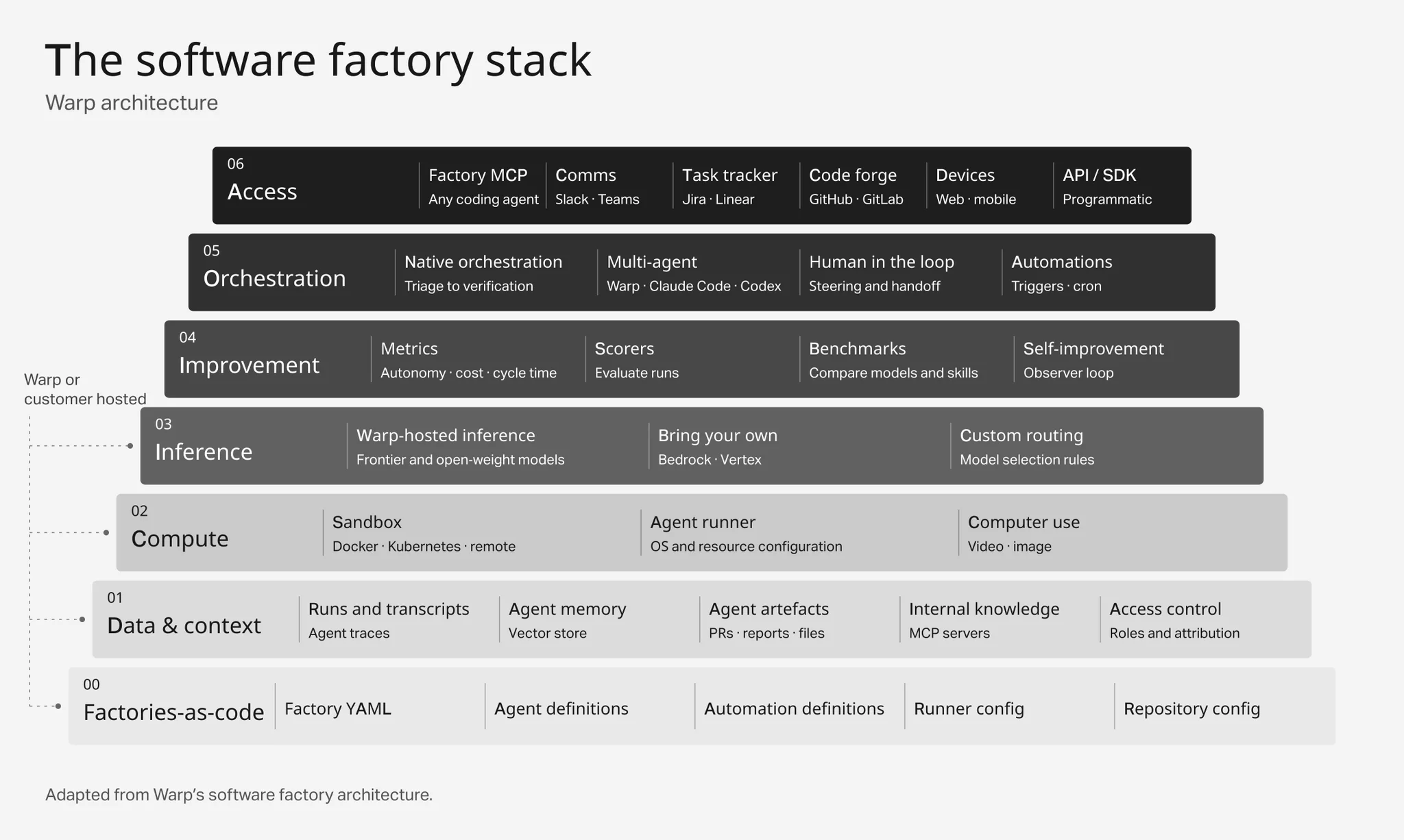
Warp describes the kind of end-to-end workflow we’re working towards at Skywire. It starts when an issue comes in and carries on through scoping, implementation, review and verification, then into monitoring after release. Our redesign gives a sense of where we are today, particularly in how we build, review and check the result against the original brief.
As more of that process becomes repeatable, I think the work shifts towards specifying what a good result looks like and deciding how to verify it. On a website, that might mean putting a design board and a browser screenshot in front of the reviewer. On another project, it might mean a set of real operating scenarios. The question I’d ask before handing over the next stage is whether the person accepting the work will have enough evidence to make that decision. For our AI development work, that might mean testing whether a tool returns the right project. For a brief on visibility in AI search, I’d want to see which source an assistant actually cited.
Frequently Asked Questions
How is this different from using an AI coding assistant?
With a coding assistant, I might steer each change myself. In a factory, I can hand over a brief with an agreed route through implementation, review and correction. Part of the work is specifying when the system should bring me back in.
Does every change need a red team review?
I find it most worthwhile when the work has changed direction several times. An independent thread can look at whether the assumptions still hold. For routine changes, the ordinary independent reviews may be enough.
Why use two models for review?
A separate reviewer can examine the finished work afresh, and a different model gives me another assessment of the same evidence. I still want either reviewer to show which requirement it checked and what it found.
What should happen if the original brief is wrong?
The agent should bring back the decision with options. I want to know what we could deliver under the existing scope, what a change would buy us, and how the alternatives affect time and cost.
How would you tell whether a factory is helping?
I’d look at what happens to a change from brief through acceptance. How often does it come back for rework? What does review catch, and what gets through? How much time does a person still spend getting it ready? Those are more useful questions for us than how quickly a model can produce the first patch.